
At a certain nuclear power plant in China, the elastomer isolators developed and manufactured by our company are used for vibration reduction of nuclear fuel assembly transportation containers. This type of elastomer isolator has completely replaced the elastomer isolator imported from Europe, and all its parameters meet or exceed those of imported brands.
Vibration protection
Nuclear fuel assembly transportation containers need to ensure the safety of fuel assemblies in complex transportation environments. As a key vibration reduction component, the rubber shock absorber can effectively slow down the vibrations and shocks generated during transportation, preventing damage to nuclear fuel assemblies and ensuring their structural integrity and safety.
Installation location
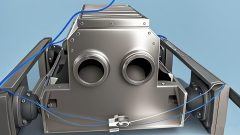
Rubber shock absorbers are usually installed on the upper shell and floating bed of the transportation container. For example, in the fuel assembly transportation container designed by a certain nuclear research institute Co., Ltd., elastomer isolator are installed on both sides of the floating bed.
Application examples
Fuel assembly transportation container of a certain nuclear research institute Co., Ltd.: This container mainly consists of an upper shell, a lower shell, a floating bed, and a door assembly. Elastomer isolators are installed on both sides of the floating bed to reduce the vibrations and collisions generated during transportation.
Design requirements and safety standards
International standards
The design of nuclear fuel transportation containers must follow international standards such as the “Regulations for the Safe Transport of Radioactive Material” (SSR–6) issued by the International Atomic Energy Agency (IAEA). These standards clearly specify requirements for the vibration reduction performance of containers, and the design of elastomer isolators must also meet these standards.
Domestic standards
China has also formulated industry standards such as the “Regulations for the Safe Transport of Radioactive Material” (GB 11806—2019), which set technical requirements for the design, manufacturing, testing, and transportation of nuclear fuel transportation containers. As an important component of the container, the design and use of elastomer isolators must also comply with these standards.